

When one of Japan’s largest financial conglomerates and a top-5 megabank build a new on-chain finance venture on Solana, it signals more than a routine partnership. SBI Holdings and Sumitomo Mitsui Financial Group (SMFG) are restructuring the existing SBI R3 Japan consortium into SBI Solana Global, with the Solana Foundation joining as a core participant. The move, first detailed in the original report, links a major regulated financial group directly to a permissionless layer-1 network in a way few traditional institutions have attempted.
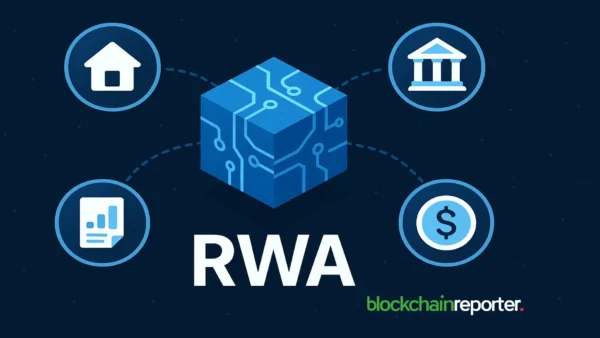
The initiative will focus on specific financial applications: yen-denominated stablecoins, tokenized real-world assets including bonds, funds, and real estate, cross-border payment rails, and institutional-grade on-chain financial services. The partnership aims to connect Japan’s tightly regulated financial markets with global blockchain liquidity and position Tokyo as a hub for on-chain finance in Asia. This is not a proof-of-concept. It is a business line pivot backed by a $300 billion banking arm.
Why Solana and Why Now
SBI already has extensive experience with digital assets. It operates a crypto exchange, has invested in Ripple, and runs blockchain funds. Choosing Solana for this venture marks a departure from the consortium-led enterprise blockchain path it pursued with R3’s Corda.
Solana’s high throughput, low fees, and growing institutional tooling make it a plausible infrastructure for asset tokenization at scale. However, the network’s periodic outages have concerned risk-averse financial players. SBI’s decision to rebrand the entity around Solana suggests a calculated bet that the network’s reliability trajectory, supported by Firedancer upgrades and validator diversity efforts, now meets institutional thresholds.
Solana has gained ground in the real-world asset space. In a separate development, total on-chain RWA value recently crossed $20 billion, driven by Treasury tokenization and private credit protocols, as covered in our weekly tokenization roundup.
Developer engagement on Solana also ranks among the strongest across major blockchains. It trails only Ethereum and BNB Chain in recent activity rankings, according to the latest developer activity data. Those metrics likely factored into SBI’s infrastructure decision.
Stablecoins and a Regulated Yen-Rail
The plan to issue JPY stablecoins under a regulated framework is the most consequential element. Japan already has a stablecoin licensing regime, and major banks like Mitsubishi UFJ have explored their own issuance.
An SBI-Solana collaboration could produce a widely used, compliant yen stablecoin that connects domestic payment systems to DeFi protocols and global settlement networks. If SMFG’s involvement extends to distribution and reserve management, the stablecoin might gain the banking credibility that privately issued alternatives struggle to achieve.
Cross-border payments are another area where the partnership may move quickly. Japan’s remittance corridors, particularly within Asia, are high-volume and often expensive.
A stablecoin-based rail running on Solana’s sub-second finality could reduce correspondent banking costs, provided it meets Anti-Money Laundering and sanctions compliance standards. SBI’s experience with international money transfers through SBI Remit gives it the operational know-how to deploy something beyond a pilot.
Regulatory Wind at the Back
Japan’s regulatory posture makes the timing notable. While US lawmakers debate crypto legislation, with banks recently attempting to derail a major Senate bill just days before a vote (more on that here), Tokyo offers a clearer path.
The Financial Services Agency has licensed stablecoin issuers and is actively encouraging Web3 business formation. SBI’s move appears designed to use that regulatory certainty by building an on-chain finance stack under Japanese oversight. The stack would include asset origination, tokenization, custody, and payment execution.
That does not guarantee immediate market uptake. Japanese institutional investors have been cautious about DeFi yields, and retail stablecoin usage remains low relative to cash and bank deposits.
The partnership will need to show clear utility, likely through interbank settlement or institutional bond tokenization, before it attracts broader liquidity.
What Remains Unanswered
Several questions remain. The partners did not disclose the exact timeline or capital commitment. It is also unclear how the renamed entity will handle interoperability with other networks or what role SBI’s existing Ripple relationship might play.
Solana’s ability to support regulated issuance at scale will be tested, while compliance at the protocol level remains a work in progress. The success of a Japan-centric on-chain market also depends on whether Asian institutional liquidity providers choose a Solana-native settlement rail over incumbent systems.
Even so, the coalition behind this venture is unusual: a financial conglomerate, a megabank, and a top-tier blockchain. That combination could reset expectations about how quickly wholesale on-chain finance is moving from white papers to balance sheets.