

Silver has had a wild year. It hit a record high of about $121.56 per ounce on January 29, 2026. By June, it had fallen to about $66. When we first wrote this article, the big question was whether it could hold above $60.
It could not. As of November 3, 2026, silver trades near $49 to $50 per ounce, according to CoinCodex and FXEmpire data. That is about 33% lower than at the start of the year and about 60% below the January peak.
In this update, we look at what pushed silver lower, what still supports it, and what forecasters expect next. Prices in this article are in US dollars per troy ounce.
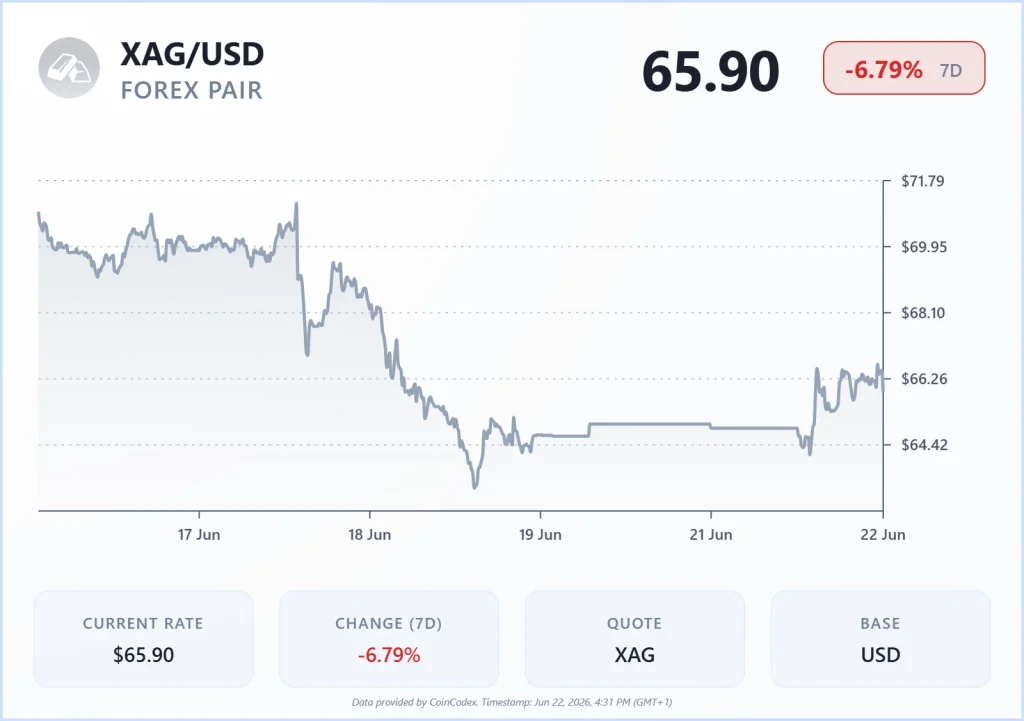
Silver Rebounds as Geopolitical Risks Return
In June 2026, silver bounced back toward $66 after three days of losses. Tension between the US and Iran had pushed investors toward safe assets. Worries about oil supply and inflation also gave silver a lift.
That rebound did not last. Silver kept sliding through the summer and autumn. Over the past month alone, it has lost about 19% of its value. In the past week, it fell about 8%.
Why Interest Rates Matter
Silver pays no interest. So when interest rates rise, it becomes less attractive than bonds or cash. A strong US dollar also tends to push silver down.
The US Federal Reserve held rates at 3.75% to 4.00% on October 28, 2026. But two officials voted for a hike. Markets now expect a rate rise at the December 9 meeting, according to futures data reported by Admiral Markets.
This hawkish mood has weighed on silver. Here are the main pressures right now:
- Higher interest rates make non-yielding metals less appealing.
- A firm US dollar makes silver more expensive for foreign buyers.
- Investors who bought near the highs keep selling into rallies.
Supply Deficit Supports Long-Term Bullish Outlook
Even with the price drop, the long-term supply picture still looks tight. The World Silver Survey 2026 expects a sixth straight year in which demand beats supply. It puts this year’s shortfall at about 46.3 million ounces.
Over the past six years, these shortfalls add up to more than 760 million ounces. That has drained stockpiles that once acted as a buffer.
Where Demand Comes From
Silver is both a precious metal and an industrial metal. It is used in:
- Solar panels, although makers now use less silver per panel.
- Electric vehicles and power grids.
- Electronics and AI data center equipment.
Physical investment is also strong. The Silver Institute expects investors to buy about 227 million ounces of coins and bars in 2026. That would be a 20% rise and a three-year high.
Why the Deficit Has Not Stopped the Fall
A tight market can still be a volatile one. Silver’s slide from January shows that a supply gap alone does not guarantee higher prices. When rates and the dollar move against silver, traders often sell first.
Thin Inventories Create Potential for Explosive Moves
The amount of silver that is free to trade is limited. In the second half of 2025, available silver in London vaults reportedly fell to record lows. That helped spark the rally toward the January 2026 high.
Low stocks can make prices jump in either direction:
- When demand rises, buyers compete for scarce metal, and prices can spike.
- When the mood turns, traders who used borrowed money must sell, and prices can drop fast.
Analysts watch two signs to judge how tight the market is:
- ETF holdings, which show how much silver funds are holding.
- Lease rates, which rise when physical silver becomes hard to borrow.
As long as stocks stay thin, silver is likely to stay volatile.
CoinCodex Silver Price Prediction
When we first wrote this article in June, the CoinCodex silver forecast was cautious. It expected prices to weaken through the second half of 2026.
How the June Forecast Played Out
The June model expected silver to average about $62 in June, then drop toward the mid-$50s in July and August. It saw September as the weakest month, with an average near $47. It then expected a small recovery into the low $50s in October and November, before ending the year near $47.
That cautious view was broadly right about the direction. Silver did fall sharply. On November 3, it traded near $49, close to the lows the model expected for late 2026.
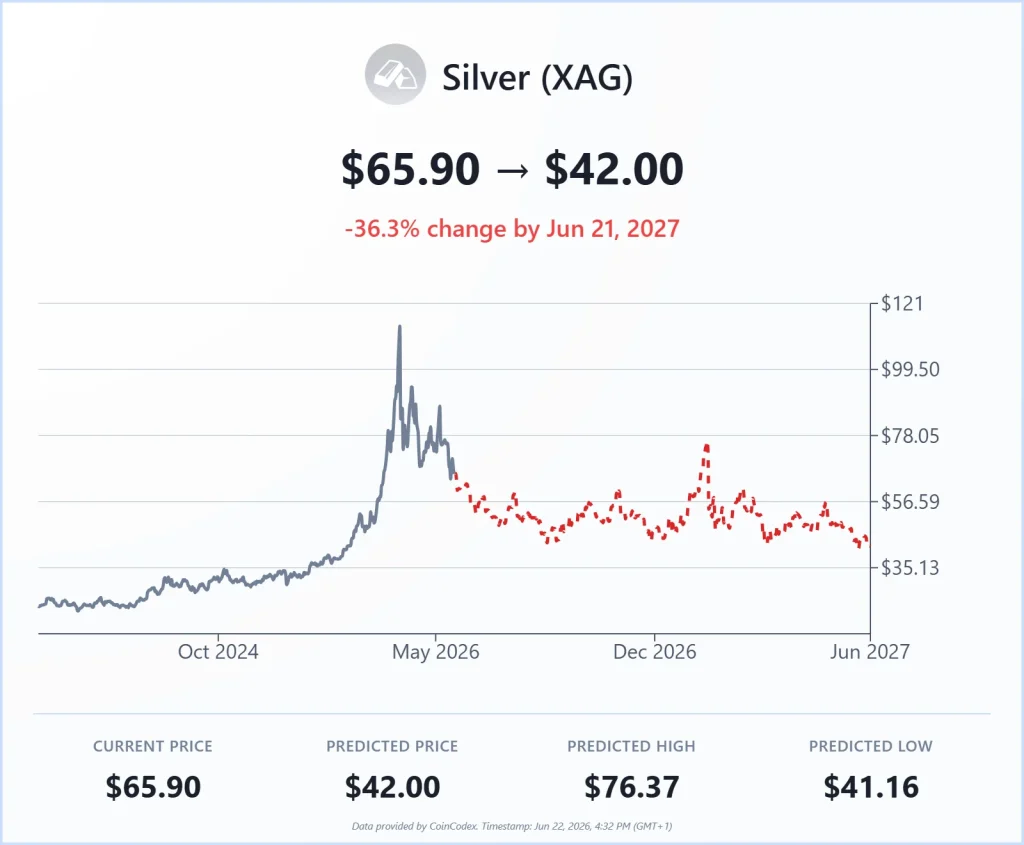
The chart above shows the CoinCodex forecast as it stood in June 2026.
The Latest Forecast
CoinCodex has since updated its model, and the new numbers are much more bullish. As of November 3, 2026, it expects:
- November 2026: an average of about $66.57.
- December 2026: an average of about $74.03.
- End of 2026: about $71.55, roughly 45% above today’s price.
- End of 2030: about $61.98.
The model also shows a peak average of about $82 in February 2027. Note that the site labels its overall sentiment as bearish, even though these targets are higher than today’s price. Treat these figures as model output, not as a promise.
What to Watch Next
Here is what could decide silver’s next move:
- The Fed’s December 9 meeting and whether it raises rates.
- The US dollar’s direction.
- ETF flows and lease rates in London.
- Signs of stronger demand from solar, EV and electronics makers.
To see how silver fits into the bigger picture, read our guide on what the price of silver reveals about the global economy. You can also compare the metal with crypto in our article on BTC trading vs silver trading.
This article is for information only and is not financial advice. Silver prices can change quickly, so check live prices before you trade.