

London, United Kingdom, July 15th, 2026, Chainwire
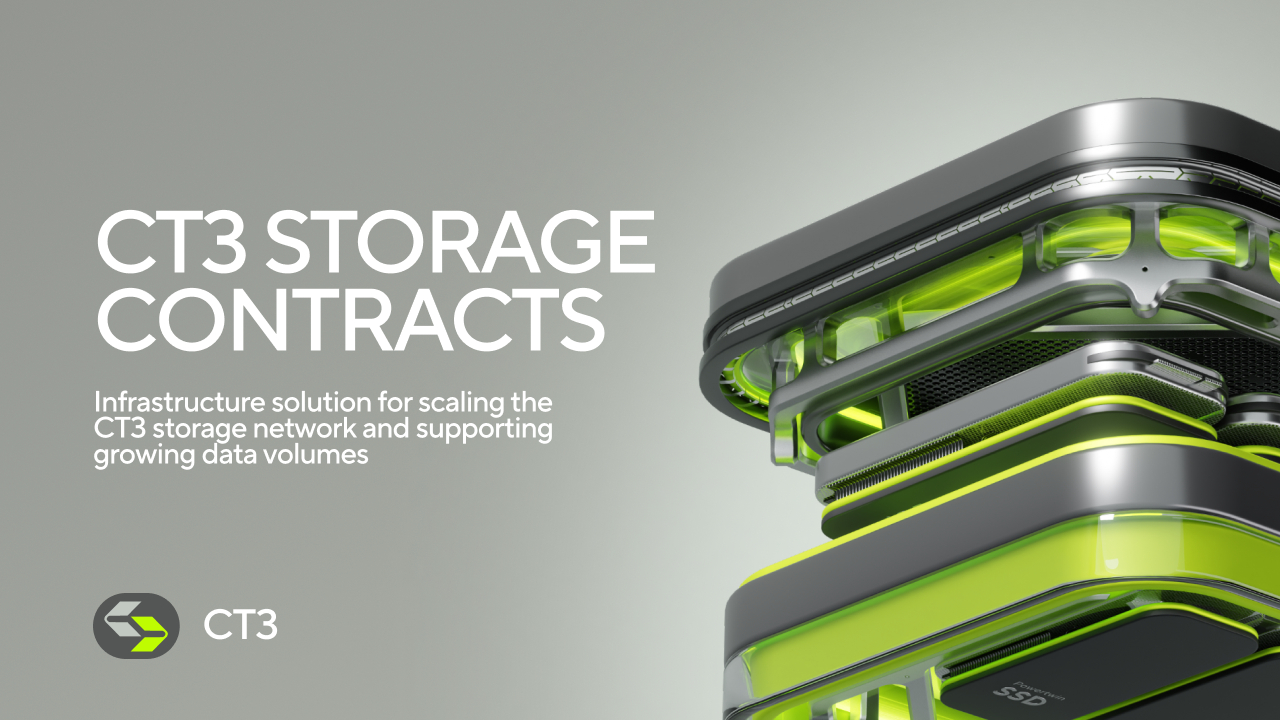
CT3 today announced that its decentralized storage network is moving to a new model built on dedicated Storage Contracts. The model is meant to support platform growth, help the network scale, and add storage space as demand rises.
Why CT3 Is Making the Change
The move follows fast growth across the CT3 ecosystem. More than 180,000 unique users have used the platform, and more than 500,000 uploads have been completed.
Each upload is linked to an NFT access key. This lets anyone check platform activity and network use on-chain. (New to the topic? Our complete guide to decentralized storage explains how these networks work.)
Rising demand for ct-3.cloud services has put more strain on the current setup. Sending every new upload through a single main collection and one smart contract can make scaling less flexible. It can also make storage space harder to manage as network activity grows.
How the New Model Works
Under the new design, new uploads will be spread across dedicated Storage Contracts instead of one main contract.
Each Storage Contract is tied to a fixed amount of storage space. It runs as its own separate part of the network, with its own space, usage level, and on-chain stats.
The new model aims to:
- spread workloads across several smart contracts
- make it clearer and easier to measure how resources are used
- support adding more storage space as demand grows
Participants may fund the launch of new Storage Contracts and the addition of storage space. That space is used to store files uploaded through ct-3.cloud. The resulting profit is shared between CT3 and the participant who funded the expansion.
Infrastructure Segmentation
Before, CT3 keys were mostly issued through the main collection and a single contract flow. As the platform grew, this model became less flexible for handling different types of data.
Storage Contracts split the network into separate segments. Each segment:
- operates through its own smart contract;
- is linked to a specific amount of storage capacity;
- can serve a particular category of files;
- allows capacity utilization and workload to be measured independently;
- reduces pressure on the main NFT key issuance process.
This split makes the network sturdier. It also lets each part of the platform grow without rebuilding the whole system.
How the Allocated Storage Capacity is Used
Each Storage Contract is tied to a set amount of space in the CT3 network. Once it is switched on, network nodes supply that storage space. It is then used to store data uploaded through ct-3.cloud.
The allocated capacity may be used for:
- standard user files;
- corporate archives;
- automatic backups;
- long-term datasets;
- future CT3 products and applications.
Larger contracts can hold heavier files and bigger flows of business or backup data. This lets the network send workloads to the segments that have enough free space.
Storage Contract Economics
The business model behind Storage Contracts is based on real use of the CT3 network. The platform buys storage space from node operators. It then provides that space to ct-3.cloud customers at the market price for storage.
A participant funds the launch of a new Storage Contract and adds to the network’s free space. Once live, this space is used to store personal and business data. The profit it makes is split between the investor and CT3.
How well each contract performs depends on two main factors:
- the actual utilization of the allocated capacity;
- the margin between the cost of acquiring storage capacity and the price charged to end users.
Storage Contracts let participants take part in the growth of the CT3 network. They may also earn income linked to real demand for storage. The more the allocated space is used, the greater the contract’s possible result.
On-chain transparency
Anyone can check how each Storage Contract is working on the blockchain. Files stored in the allocated space are shown as NFT keys that hold storage details.
The total size of the files tied to these keys can be compared with the usage figure shown for the contract. Using the smart contract address, an investor can check issued NFTs, collection activity, and how much of the space they funded is really being used.
This model makes it possible to check on your own:
- the number of keys created;
- the volume of stored data;
- utilization of the allocated capacity;
- activity within a specific Storage Contract;
- the relationship between infrastructure usage and profit generation.
For ct-3.cloud users, nothing changes. Both current and new NFT keys keep working, and the move to the new design needs no extra action.
CT3 has since shared more plans for its token economy. Read how CT3 is preparing its ecosystem for the CT3GB economy.
About CT3
CT3 is building a decentralized data storage network. It combines independent nodes, the ct-3.cloud interface, NFT access keys, and blockchain checks.
Users upload files through ct-3.cloud. The data is then spread across network nodes. An NFT key is created for every stored object. It confirms access rights and holds the storage details.
In this model, nodes provide physical storage space. CT3 manages how data is spread and accessed. Individual and business users create the demand for storage.
As users and uploads grow, the network must keep adding space. At times, demand may grow faster than node operators can add new space. Storage Contracts let CT3 add new resources in an orderly way and assign them to specific uses.
Contact
CMO
Rodrigo Pereira
CT3
contact@ct-3.ltd
This is a press release / sponsored content. Read our Sponsored Content Policy. This article is not intended as financial advice. Educational purposes only.
About the author
Chainwire is a specialized newswire service providing high-impact distribution for the blockchain and crypto industry." PlayNewswire: "PlayNewswire is a specialized newswire service providing high-impact distribution for the igaming industry.