

- 1. What Is VWA Crypto (Vanguard Token)?
- 2. How Does VWA Work?
- 3. VWA Token: Key Facts
- 4. VWA vs Legitimate RWA Tokens on Solana
- 5. VWA Price History
- 6. What Is the Simpsons VWA Prediction?
- 7. Does VWA Have a Connection to Vanguard Investments?
- 8. VWA Risks: What Investors Should Know
- 9. Is VWA a Scam or Legitimate?
- 10. VWA Price Prediction
- 11. Where to Buy VWA Crypto
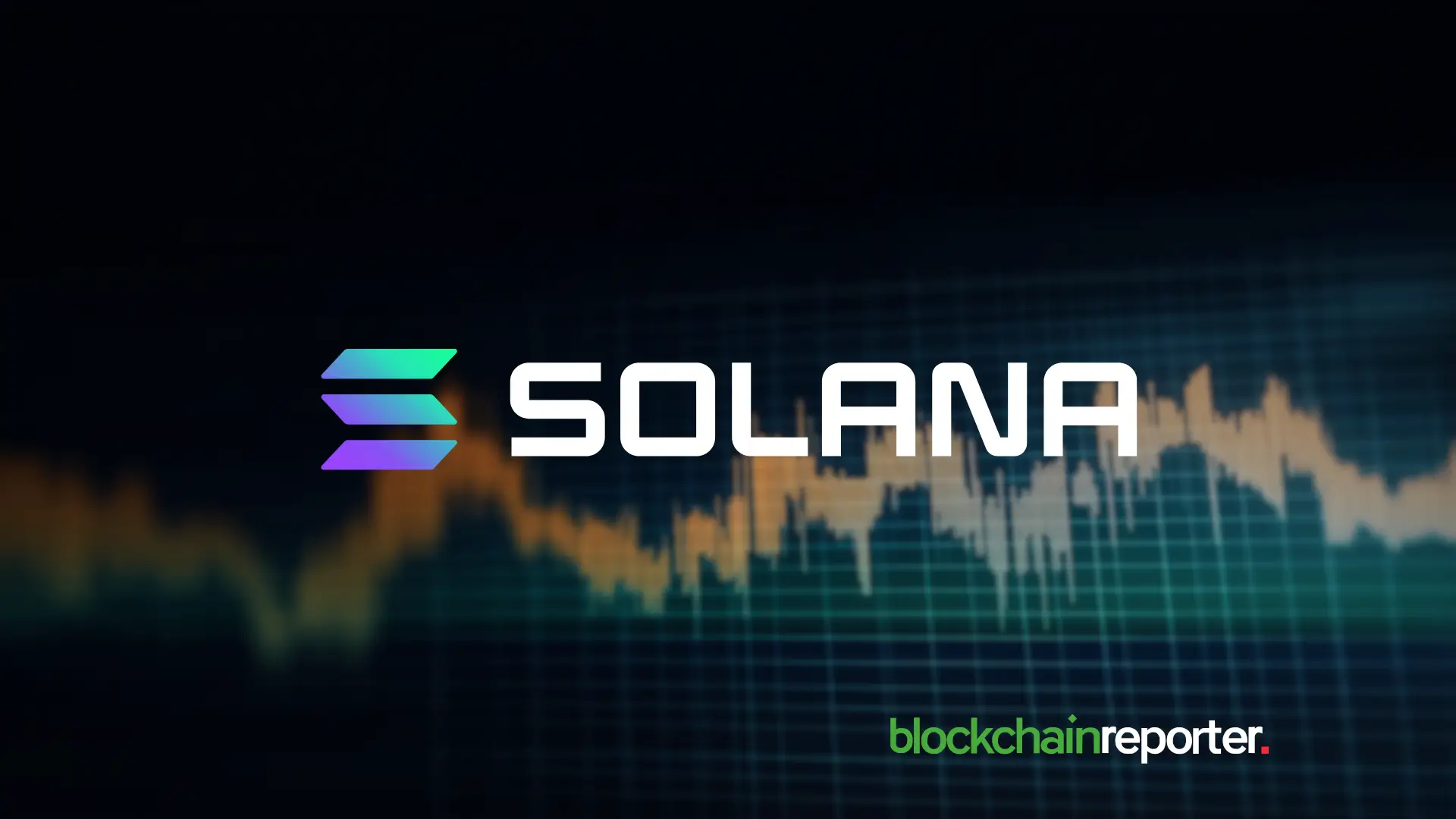
Quick Answer: VWA is the native token of Vanguard, a Solana-based project that claims to tokenize real-world assets (RWAs) such as gold, silver, and gemstones. Launched on October 4, 2025, VWA went viral through social media campaigns — including debunked claims about a “Simpsons prediction” and false associations with Vanguard Investments and BlackRock. As of May 2026, VWA is trading near $0.00037–$0.00056 with a market cap in the low hundreds of thousands of dollars. The project has no published whitepaper, no audited smart contracts, and approximately 90% of token supply concentrated in 50 wallets — all of which are significant red flags that any investor must evaluate before purchasing.
Key Takeaways:
- VWA is an SPL token on Solana, launched October 4, 2025, claiming to tokenize precious metals and gemstones on-chain
- Has no connection to Vanguard Investments or BlackRock — both have publicly denied any affiliation
- 90% of token supply is held by approximately 50 wallets, creating extreme concentration and manipulation risk
- No whitepaper, no audited contracts, and no verified proof of physical asset backing as of May 2026
- A V2 migration launched in March 2026, suggesting the project is still actively developing — but transparency remains limited
VWA emerged in the same moment as the broader RWA tokenization narrative was reaching mainstream attention. When projects like BlackRock’s BUIDL fund and Ondo Finance were demonstrating that tokenized treasuries could attract billions in institutional capital, a wave of smaller projects launched to capture retail interest in the theme. VWA was among the most viral of these — reaching a $7.4 million market cap at peak hype before retreating sharply. Understanding what VWA is, what it claims to do, and where its significant risks lie is essential before forming any view on the token.
What Is VWA Crypto (Vanguard Token)?
VWA is an SPL token on the Solana blockchain built by a project calling itself Vanguard RWA. According to its official website, Vanguard’s stated mission is to “transform precious physical assets into accessible digital investments” — a pitch squarely aimed at the real-world asset (RWA) tokenization trend that has dominated crypto narratives since 2024.
The project claims its platform will allow users to:
- Tokenize physical assets including gold, silver, and gemstones
- Access fractional ownership of high-value physical commodities through on-chain tokens
- Earn liquidity rewards for participating in the ecosystem
- Eventually participate in protocol governance via VWA holdings
VWA operates on Solana because of its high transaction throughput and near-zero gas fees — the same reasons that legitimate large-scale RWA projects like Ondo Finance and BlackRock’s BUIDL fund have deployed assets on Solana. The token is accessible through the Phantom Wallet and trades on Jupiter DEX, the primary Solana-based aggregated DEX.
Critical disclaimer: The name “Vanguard” and the VWA ticker have no connection to Vanguard Investments, the $8 trillion traditional asset management firm. Vanguard Investments has confirmed through multiple channels that it has no affiliation with this project. Similarly, claims that circulated on social media suggesting BlackRock backing are false. Any investor who encountered VWA through social media should verify independently that no institutional backing exists.
How Does VWA Work?
VWA functions as an SPL (Solana Program Library) token — the Solana equivalent of an ERC-20 on Ethereum. Holders of VWA are supposed to have access to the Vanguard platform’s tokenized asset services, earn liquidity rewards, and eventually vote on governance proposals.
In practice, the platform’s on-chain mechanics are not yet fully verifiable. Unlike established RWA projects such as Ondo Finance (which publishes audited smart contracts and regular proof-of-reserve reports), VWA has not published:
- A whitepaper outlining token economics or asset backing mechanisms
- Audited smart contracts by a recognized security firm
- Verified proof that any physical assets have been tokenized and custodied
The V2 migration announced in March 2026 — described by the project as “a stronger foundation for a more powerful ecosystem” — included an airdrop portal for early supporters and a claim dashboard for qualified wallets. This activity shows the project team remains engaged, but it does not address the core transparency concerns that analysts have flagged since launch.
VWA Token: Key Facts
| Metric | Value (May 2026) |
|---|---|
| Token Name | Vanguard (VWA) |
| Blockchain | Solana (SPL token) |
| Launch Date | October 4, 2025 |
| Price (approx.) | $0.00037–$0.00056 |
| Market Cap | Low hundreds of thousands USD |
| Token Concentration | ~90% held by top 50 wallets |
| Whitepaper | None published |
| Smart Contract Audit | Not confirmed |
| DEX | Jupiter, Phantom Wallet |
| Contract Address | GJvLcMvQwznh1gAonWnqbqdSRrNCQmVzhfsZVvQdtM4b |
VWA vs Legitimate RWA Tokens on Solana
Understanding VWA requires comparing it to what established RWA tokenization actually looks like on Solana. Solana’s RWA market surged to $2.5 billion in total value locked in early 2026, driven by institutional-grade projects with audited contracts and regulated custodians.
| Project | Asset Type | Solana TVL | Audited | Institutional Backing |
|---|---|---|---|---|
| BlackRock BUIDL | US Treasuries | $322M+ | Yes | BlackRock |
| Ondo USDY | US Treasuries | $179M+ | Yes | Ondo Finance |
| Maple syrupUSDC | Private credit | $164M+ | Yes | Maple Finance |
| VWA (Vanguard) | Gold, silver (claimed) | <$1M | No | None confirmed |
The contrast is stark. Legitimate RWA projects on Solana are backed by verified asset custodians, publish regular proof-of-reserve reports, and have smart contracts audited by recognized security firms. VWA’s claimed asset backing remains unverified as of this writing. The broader Solana RWA ecosystem hit a $1.66 billion all-time high in February 2026 — VWA is not a recognized contributor to those figures.
VWA Price History
VWA launched on October 4, 2025, and within days became one of the most discussed tokens on Crypto Twitter through viral social media campaigns.
| Period | Price / Event |
|---|---|
| Oct 4, 2025 | Launch on Solana |
| Oct 7–10, 2025 | Viral surge — “Simpsons prediction” hoax circulates; price peaks |
| Oct 14, 2025 | Market cap reaches ~$7.4M at peak; widespread coverage |
| Nov–Dec 2025 | Sharp correction as debunking articles published |
| Mar 2026 | V2 migration announced; airdrop portal for early holders |
| May 2026 | Trading near $0.00037–$0.00056; market cap in low hundreds of thousands |
The October 2025 viral spike was driven almost entirely by social media content — including a fabricated claim that The Simpsons had “predicted” VWA in an episode (the episode in question contained no cryptocurrency references) and false suggestions of Ripple and Vanguard Investments backing. When these claims were debunked by multiple outlets in the second week of October, the price corrected sharply.
What Is the Simpsons VWA Prediction?
One of the most-asked questions about VWA is whether The Simpsons predicted it. The answer is no. In early October 2025, edited images and videos circulated on social media claiming that a Simpsons episode predicted VWA’s rise. Independent analysis confirmed the images were fabricated — the cited episode (S34E12) contains no cryptocurrency references of any kind.
This type of manufactured narrative — attaching a well-known cultural reference to a newly launched token to generate FOMO — is a common pattern in speculative token launches. The Simpsons connection is entirely false.
Does VWA Have a Connection to Vanguard Investments?
No. Vanguard Investments, the $8 trillion asset management firm known for index funds and ETFs, has no affiliation with the VWA crypto project. The name and branding were chosen independently by the VWA project team. Multiple independent journalists confirmed with Vanguard Investments that they have no relationship with the token.
Similarly, claims of Ripple integration, BlackRock backing, or SWIFT banking connectivity have not been confirmed by any of those organizations. Industry analysts have described these marketing claims as “dangerously misleading” for retail investors who may not distinguish between the VWA project and the established financial institutions whose names have been used in proximity to it.
VWA Risks: What Investors Should Know
VWA carries a set of red flags that distinguish it from higher-quality projects, even within the speculative token category.
Token concentration. Approximately 90% of VWA’s circulating supply is held by roughly 50 wallets, most linked to the project deployer according to on-chain analysis via BubbleMaps. This level of concentration means a small number of wallets can significantly move the price — either upward through coordinated buying or downward through large sells.
No whitepaper. As of May 2026, VWA has not published a formal whitepaper explaining its token economics, asset backing mechanism, governance structure, or roadmap milestones. For a project claiming to tokenize physical commodities, the absence of documented asset custody arrangements is a fundamental gap.
No smart contract audit. VWA’s contracts have not been independently audited by a recognized security firm (CertiK, Trail of Bits, Quantstamp). Without an audit, users cannot verify that the contracts function as described or that they do not contain exploitable vulnerabilities.
Unverified asset backing. The project claims to tokenize gold, silver, and gemstones but has published no proof-of-reserve reports, custodian agreements, or third-party verification of physical holdings. Legitimate RWA projects provide this documentation as standard practice.
False claims in marketing. The Simpsons prediction, Vanguard Investments association, and BlackRock backing claims all proved false. A pattern of misleading marketing increases the reputational and execution risk for the project.
Is VWA a Scam or Legitimate?
The honest answer is: unclear, with significant risk indicators. VWA is a real token on a real blockchain — it trades on Jupiter DEX and can be purchased and held. The V2 migration in March 2026 shows the project team is still active. These are not the typical characteristics of an immediately exit-scammed project.
However, the combination of no whitepaper, no smart contract audit, no verified asset backing, extreme token concentration, and false marketing claims creates a risk profile that demands extreme caution. Multiple independent analysts have publicly urged investors to treat VWA as a high-risk speculative asset at minimum, and potentially as a token that could trend toward zero if the team cannot deliver verifiable RWA backing.
For investors who want exposure to RWA tokenization on Solana, established and audited protocols including Ondo Finance (USDY), Maple Finance (syrupUSDC), and BlackRock BUIDL represent the institutional-grade alternatives.
VWA Price Prediction
Third-party forecasts for VWA are limited given the token’s short history and thin liquidity.
| Source | 2026 Projection | Notes |
|---|---|---|
| Bitget analysis | $0.020–$0.040 | Conditional on verified RWA delivery |
| CoinMarketCap community | ~$0.0001 | Bearish community consensus |
| BTCC | Trend toward zero | If real utility not established |
The wide range reflects the binary nature of VWA’s outlook: if the project delivers verified, audited RWA tokenization infrastructure with real asset backing, it could capture meaningful share of a growing market. If it does not, analysts broadly expect continued price erosion. There is no middle-case model with strong fundamental support given current transparency levels.
Where to Buy VWA Crypto
VWA is primarily available on decentralized platforms due to its small market cap and limited centralized exchange presence.
Decentralized exchanges (DEX):
- Jupiter DEX (jup.ag) — the primary Solana aggregated DEX; VWA is tradeable via USDC or SOL pairs
- Phantom Wallet — supports direct token swaps for VWA via its built-in DEX aggregator
Centralized exchanges (CEX):
- Binance does not currently list VWA
- Coinbase shows a price page for VWA but the how-to-buy page redirects — direct purchase may not be available
- Gate.io and MEXC may list VWA — check current availability on each platform before attempting to purchase
Before buying on any DEX: Always verify the correct contract address: GJvLcMvQwznh1gAonWnqbqdSRrNCQmVzhfsZVvQdtM4b on Solana. Counterfeit tokens using similar names are common on DEXs. Always cross-reference with CoinMarketCap or CoinGecko before executing a purchase.
Nothing in this article constitutes financial advice. VWA is a high-risk speculative token. Always do your own research.
Frequently Asked Questions
What is VWA crypto?
VWA is the native token of Vanguard, a Solana-based project launched in October 2025 that claims to tokenize real-world assets including gold, silver, and gemstones. It trades on Jupiter DEX and Phantom Wallet. It has no connection to Vanguard Investments, no published whitepaper, and no audited smart contracts as of May 2026. It went viral through social media in October 2025 partly due to a debunked "Simpsons prediction" claim.
Where can I buy VWA crypto?
VWA is primarily available on Jupiter DEX (jup.ag) and through Phantom Wallet's built-in swap feature on Solana. Always verify the correct contract address (GJvLcMvQwznh1gAonWnqbqdSRrNCQmVzhfsZVvQdtM4b) before purchasing to avoid counterfeit tokens. Centralized exchange availability is limited — check Gate.io and MEXC for current listings.
Is VWA crypto connected to Vanguard Investments?
No. Vanguard Investments, the $8 trillion asset manager, has no affiliation with the VWA token. The name was chosen by the VWA project team independently. Social media claims suggesting Vanguard Investments, BlackRock, or Ripple backing are false and have been publicly debunked.
Is VWA crypto a scam?
VWA has significant red flags: no whitepaper, no audited contracts, ~90% token concentration in 50 wallets, unverified asset backing, and false marketing claims including the Simpsons prediction hoax. Whether it constitutes a "scam" in a legal sense is not established, but its risk profile is extreme. Multiple independent analysts have flagged it as a potential zero-trend asset if verifiable RWA infrastructure is not delivered.
What is VWA crypto price prediction?
Forecasts diverge widely. Bitget's conditional bull case places VWA at $0.02–$0.04 by 2026 if verified RWA delivery occurs. CoinMarketCap community consensus averages near $0.0001. BTCC analysts project a trend toward zero without real utility. No major third-party platform has issued a standard price model for VWA due to its short history and thin liquidity.ShareContentThe theoretical threat of quantum computers to Bitcoin’s cryptographic security now has a dollar figure: $469 billion. That’s the value of 6.04 million BTC, or 30.2% of the total issued supply, whose public keys are exposed on-chain today and could be exploited if a sufficiently powerful quantum compastedQuick Answer: AMP is currently trading near $0.000841, down roughly 99.3% from its June 2021 all-time high of $0.1208. Third-party forecasts for 2026 range widely — from $0.0009 on the bearish end (CoinCodex) to $0.0100 on the bullish end (PricePrediction.net) — with the base-case consensus sitting pasted