

Every autumn, the people who run compliance at fund firms, brokers and clearing houses read the same document. They all ask the same question: where will the examiners look next?
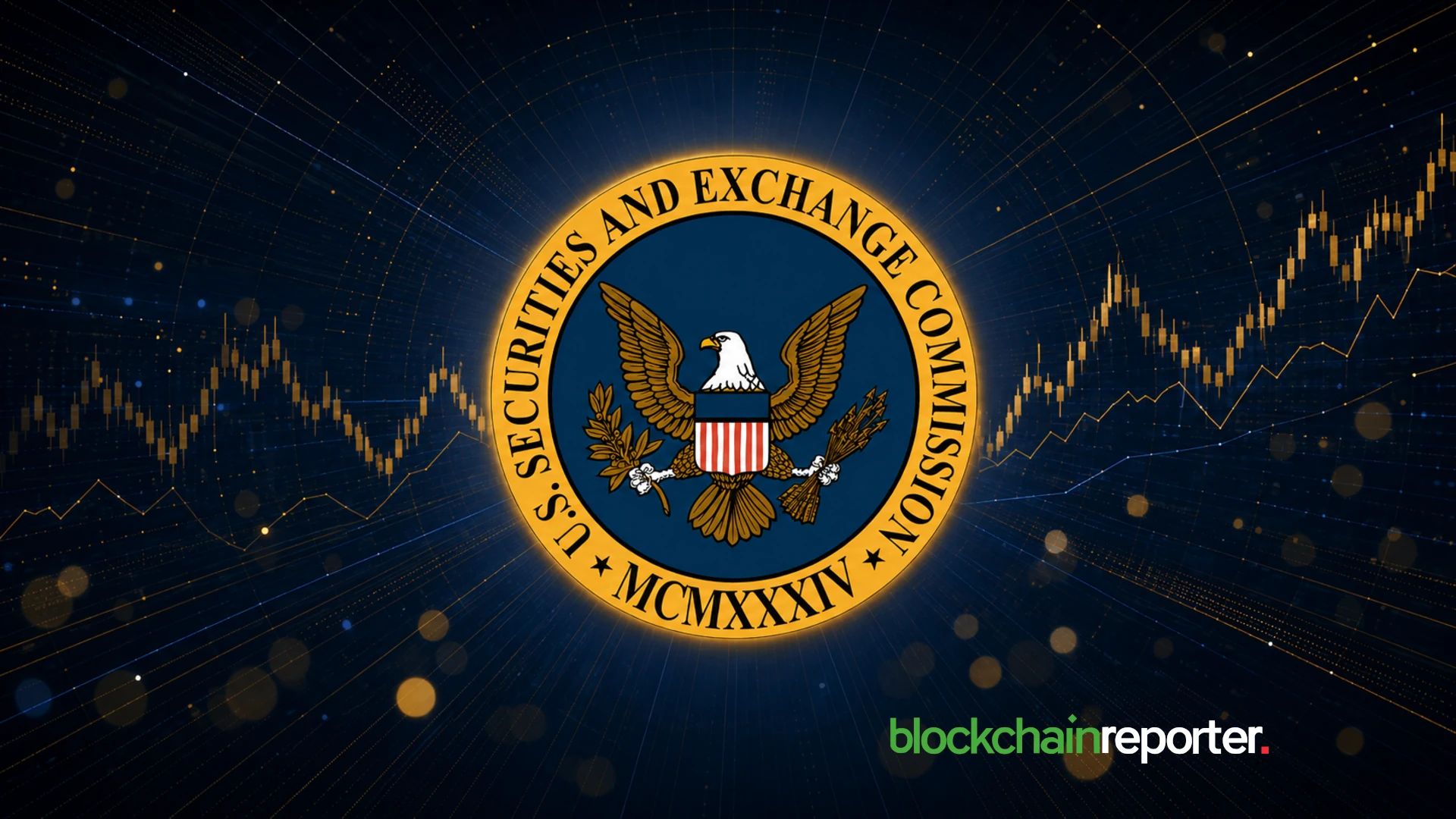
On Thursday, the U.S. Securities and Exchange Commission (SEC) gave them the answer. Two phrases stood out that were not there a year ago: “super intelligence” and “tokenization.” Tokenization means turning assets such as stocks or funds into tokens on a blockchain.
The SEC’s Division of Examinations published its Fiscal Year 2027 examination priorities on 23 October. It sets out eight areas where examiners will focus. The plan covers more than 34,000 firms. Among them are investment advisers, brokers, clearing firms, transfer agents and funding portals.
Most of the list is the usual work of a market regulator. The two new lines are the ones that matter to anyone building finance on a blockchain.
“Examinations are one of the Commission’s most important tools for promoting compliance with the federal securities laws and helping protect investors,” SEC Chairman Paul S. Atkins said in the announcement. “Examinations provide critical insight into emerging risks, evolving business practices, and market developments across our financial system.”
A Phrase That Was Not in Last Year’s Document
To see what changed, you have to compare last year’s edition with this one.
The FY2026 priorities came out in November 2025 under the same chairman. They made no standalone mention of cryptocurrency or digital assets. Their technology section spoke of “AI” and “artificial intelligence.” It covered automated investment tools, trading algorithms and what the agency called misrepresentations of a firm’s AI capabilities.
The FY2027 version swaps that wording for a sharper term: “super intelligence,” or SI.
The release names it plainly among the eight priority areas: “Emerging technologies, including super intelligence and other advanced technologies that may affect market operations, compliance, fraud prevention, and investor protection.”
It is not a stray mention. The phrase runs through the full priorities document. It opens by noting that “registrants are increasingly incorporating super intelligence (SI) into their businesses.” The document lists where firms use these tools:
- Research, writing and coding
- Talking to clients
- Advice and portfolio management
- Compliance checks and monitoring
The deeper the document goes, the more concrete it gets. Under “Emerging Financial Technology,” the Division makes two points side by side. Firms now use SI in their core work, from picking investments to managing customers and writing code. At the same time, “threat actors are using SI to automate and accelerate cyberattacks.”
The examiners also name the attacks they will look for: “SI-generated phishing messaging and synthetic or deepfake voice and video used for social engineering.”
That detail shows this is not a list of buzzwords. The Division is telling firms it will test their defenses against a threat that was not in past exam playbooks: fake voice and video used to trick staff into moving money.
Tokenization Comes Back Through a Side Door
Tokenization’s return is just as deliberate, and just as quiet. The FY2026 edition had no crypto category at all. The FY2027 priorities bring the idea back under a new label: market structure, not “digital assets.”
The seventh priority area reads, word for word: “Risks associated with evolving market infrastructure, including Treasury clearing reforms, tokenization, and related developments.”
A second mention appears in the section on Regulation SCI. These rules cover the tech systems that run exchanges and other key parts of the market. There, examiners “will focus on emerging trends, including SI, tokenization of securities, extended trading hours, and quantum computing.”
Reading the two documents side by side makes the shift easy to measure:
| Regulation SCI focus | FY2026 priorities | FY2027 priorities |
|---|---|---|
| Incident response | Yes | Not named |
| Third-party vendor risk | Yes | Not named |
| Super intelligence (SI) | No | Yes |
| Tokenization of securities | No | Yes |
| Extended trading hours | No | Yes |
| Quantum computing | No | Yes |
In twelve months, tokenization went from absent to on the record.
What the Eight Priorities Actually Say
Here are the eight areas, in the agency’s own order:
- How investment advisers put clients first, handle conflicts, make advice and run compliance
- Protecting everyday investors, mainly in complex, risky or hard-to-sell products
- Private funds, private loans and other complex strategies
- Broker-dealer finances, trading, oversight of staff and anti-money-laundering checks
- Keeping systems running, cyber safety and protecting customer data
- Emerging technologies, including super intelligence
- Changes in market plumbing, including Treasury clearing and tokenization
- Oversight of self-regulatory bodies and other key market players
That is the full list. There is no crypto section and no separate digital-asset category. The Division chose to fold tokenization into infrastructure and let “super intelligence” lead on technology.
This is a choice, not a mistake. The regulator is telling the market it now sees tokenized securities as a question of how markets run, not of one type of asset. Our guide on what tokenized stocks are explains the basics.
Keith Cassidy, the Division’s director, described the approach in the announcement: “The markets we oversee continue to evolve rapidly, and the examination program must evolve with them. Our approach enables us to adapt to changing market conditions, identify developing risk patterns, respond to emerging threats, and anticipate areas where investors and the markets may be vulnerable.”
Why the Disclaimer Matters
None of this creates new law. The priorities document opens with a disclaimer. It says the statement “has no legal force or effect: it does not alter or amend applicable law, and it creates no new or additional obligations for any person.” The Commission itself has neither approved nor disapproved the staff’s content.
Still, the effect is real, and compliance teams treat it that way. Exam priorities show where the Division will spend its time. That points to the questions firms will face in 2027:
- How do they hold and price tokenized assets?
- Do their outside vendors’ systems fall under Regulation SCI?
- Do they check their AI or SI tools for fraud, money laundering and best-interest duties to clients?
A priority is not a rule. But it is a map of where the questions will land.
One easily missed line points the same way. The priorities’ leadership message notes an “enhanced Memorandum of Understanding (MOU)” between the SEC and the Commodity Futures Trading Commission (CFTC). The agreement lets the two agencies plan exams together and even run joint exams.
Some tokenized products sit between a stock-like security and a derivative. Some exchanges list both. For them, examiners may now show up in pairs.
What It Means for Crypto’s Adjacent Businesses
For firms building on-ramps, the tokenization line matters most. This week alone, J.P. Morgan expanded its tokenized money market funds to Solana. That puts a bank-grade yield product on a public blockchain for qualified U.S. investors.
This is just the kind of setup the examiners now flag. In a tokenized fund, three things become exam questions: who holds the assets, how they are priced, and how on-chain and off-chain records match.
The same logic reaches the retail side. Platforms that let investors buy tokenized stocks work through transfer agents and brokers. Both are on the Division’s list of firms to check.
The priorities’ transfer-agent section says examiners will review “the use of emerging technology to perform transfer agent functions.” That applies directly to any firm that records share ownership on a blockchain.
The newest registrants face the longest list. The priorities set aside a category for advisers “that have never been examined, with particular emphasis on recently registered advisers,” and many new crypto firms fall right into it.
A crypto firm that registered this year will face its first exam with every one of these flags at once:
- An SI tool in its tech stack
- A tokenized product on its shelf
- A compliance program that is still proving itself
For these firms, the priorities document is less a map than a study guide for an exam that is already on the calendar.
On technology, the signal runs both ways. The Division is examining how firms use SI, and it is also using SI in its own exams. The document says SI tools may help staff analyze data, work faster and spot risks in large datasets. But it stresses that these tools support staff judgment and do not replace it.
The regulator is auditing the technology while adopting it. That is a fair description of where the whole industry stands.
The real takeaway is simple. A year ago, the SEC’s examiners had no tokenization on the page and no “super intelligence” in their words. Now both are in the yearly plan for more than 34,000 firms.
Firms that build sound, well-run tokenized products just got a clearer view of the road ahead. Firms that hoped the examiner would not look are out of time. For the wider U.S. policy picture, see our explainer on the CLARITY Act.
About the author
Samuel is a professional cryptocurrency writer specializing in blockchain technology and market analysis. He delivers in-depth insights into emerging trends and developments, producing well-researched, engaging content that makes complex crypto topics accessible to both newcomers and experienced industry professionals. Through his analytical approach and clear writing style, Samuel provides valuable perspectives on the evolving digital asset landscape, establishing himself as a credible and trusted voice in the cryptocurrency industry.